


Identity security looks simple until access starts growing faster than control. This is why this guide studies SailPoint competitors in a deeper way. Instead of only listing features, it looks at real enterprise problems like access sprawl, review fatigue, and authentication friction.
Security guidance now pushes phishing resistant authentication and least privilege access which shows where modern identity is moving.
The research behind this article focuses on how platforms behave when identity becomes complex, not when everything is clean and new.
Best SailPoint Competitors: Comparison
How We Evaluated These SailPoint Alternatives
Identity problems usually grow slowly inside enterprises. Access keeps increasing while control often stays behind. Security teams then face risk visibility gaps and audit pressure at the same time.
These SailPoint alternatives are listed based on speed, cost scalability and ease of use along with the core identity capabilities enterprises depend on.
- Identity lifecycle automation. We evaluated how well each platform automates onboarding role changes and offboarding so unused access disappears quickly.
- Access governance control. Platforms were checked on how effectively they maintain role based access without heavy manual work.
- Authentication experience. We reviewed how well platforms support stronger authentication while keeping login simple for daily use.
- Audit and compliance readiness. Platforms were evaluated on how clearly they keep governance actions traceable for compliance checks.
- Machine identity management. Modern environments include service accounts, APIs and automation workloads that hold powerful access. Platforms were evaluated on how well they manage non-human identities alongside human users.
SailPoint Overview
SailPoint is an Identity Governance and Administration (IGA) platform used by companies to control and manage access. It helps organizations decide who can enter which system and what they are allowed to use. The platform focuses on identity governance so access stays organized and permissions do not grow out of control.
- Access control and governance. SailPoint helps manage user access through rules and reviews so permissions do not grow out of control.
- Access reviews for compliance. Teams can check who has access and remove extra permissions which helps during audits.
- Built for large organizations. The platform works well when many users' apps and permissions need to be managed from one place.
10+ Top SailPoint Competitors for Enterprise Identity Security
1. JumpCloud
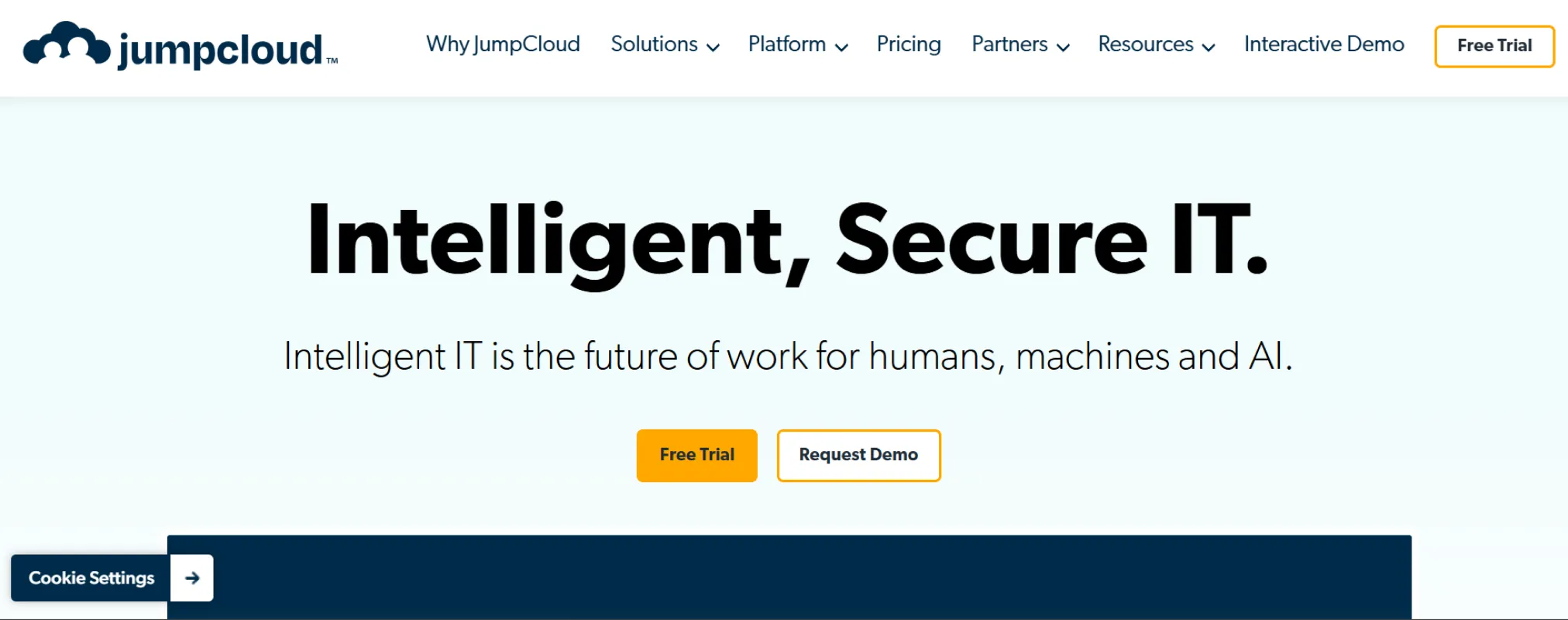
JumpCloud is easy to understand because it mixes identity and device control in one place. It is often mentioned among SailPoint identity governance alternatives because it keeps access and device management together. Admins can manage Windows, Apple, Linux, and Android devices in one system. Users get simple login with SSO and extra safety with MFA.
Key Features
- Unified directory and identity control. JumpCloud works like a central identity layer where users' devices and access rules stay connected. Teams manage identities and endpoints from one place instead of switching tools.
- Single sign on with MFA. Users sign in once and then access many apps while MFA adds extra protection. This reduces password fatigue and keeps access safer across SAML and OIDC apps.
- Cross platform device management. Admins manage Windows, Apple, Linux, and Android devices together. Identity and device control stay linked which helps enterprise security teams enforce policies easily.
- Zero trust access approach. Access is not trusted automatically. The platform checks identity and context before allowing entry which fits modern enterprise security models.
- Flexible authentication options. Security keys, device authenticators and multiple MFA methods are supported so organizations can choose stronger login methods without heavy friction.
Pros
- JumpCloud keeps identity and device control together so admins do not jump between many tools.
- The platform supports SSO and MFA which makes login safer without adding too much friction for users.
- It supports many device types and this helps mixed IT environments. Teams using Windows, Apple, Linux, and Android can still follow one identity policy.
Cons
- Governance depth is not as heavy as traditional IGA platforms. Large enterprises that need complex certification workflows may feel limited.
- Advanced setups sometimes need more planning than expected.
- Some organizations say reporting and deep compliance views are not as detailed as enterprise first governance tools.
2. Infisign
Infisign focuses on simple login and smart access control. It helps companies automate user access when people join, move or leave. Passwordless login makes daily use easier for employees. Governance and access rules stay clean without heavy manual work.
Key Features
- Automates Joiner–Mover–Leaver (JML) Processes. Infisign automates onboarding, role changes and offboarding so access follows the user lifecycle without manual effort. New users can get access fast based on role and department. When someone changes roles, permissions update automatically.
- Access Governance & Policy Enforcement. Infisign uses policy based governance so access is controlled through clear rules instead of random approvals. Admins define policies and the system applies them across apps and environments. This keeps permissions aligned with business rules and reduces access sprawl.
- Automated Access Reviews & Certifications. Infisign runs structured access review campaigns that help managers verify who still needs access. AI driven insights and automated certification workflows reduce manual review work and help teams remove unnecessary permissions faster.
- Compliance & Audit Readiness.Infisign supports compliance frameworks like SOX, HIPAA, GDPR, ISO 27001, and SOC 2 while keeping logs and governance records centralized. This makes audit preparation easier because access decisions and identity activity stay visible and ready for reporting.
- Machine & Non-Human Identity Management. Infisign also manages machine identities like service accounts, APIs and automation tools. These identities follow governance policies just like human users so organizations can reduce hidden risk inside modern cloud environments.
Pros
- Infisign pushes strong passwordless login and phishing resistance which reduces risk from stolen credentials.
- The platform automates lifecycle management and access governance which helps reduce manual IAM work.
- Compliance support is clear because audit logs and reports stay centralized. Organizations can prepare for audits faster without collecting data from many places.
Cons
- Passwordless authentication requires the use of its encrypted password vault feature.
3. Microsoft Entra ID
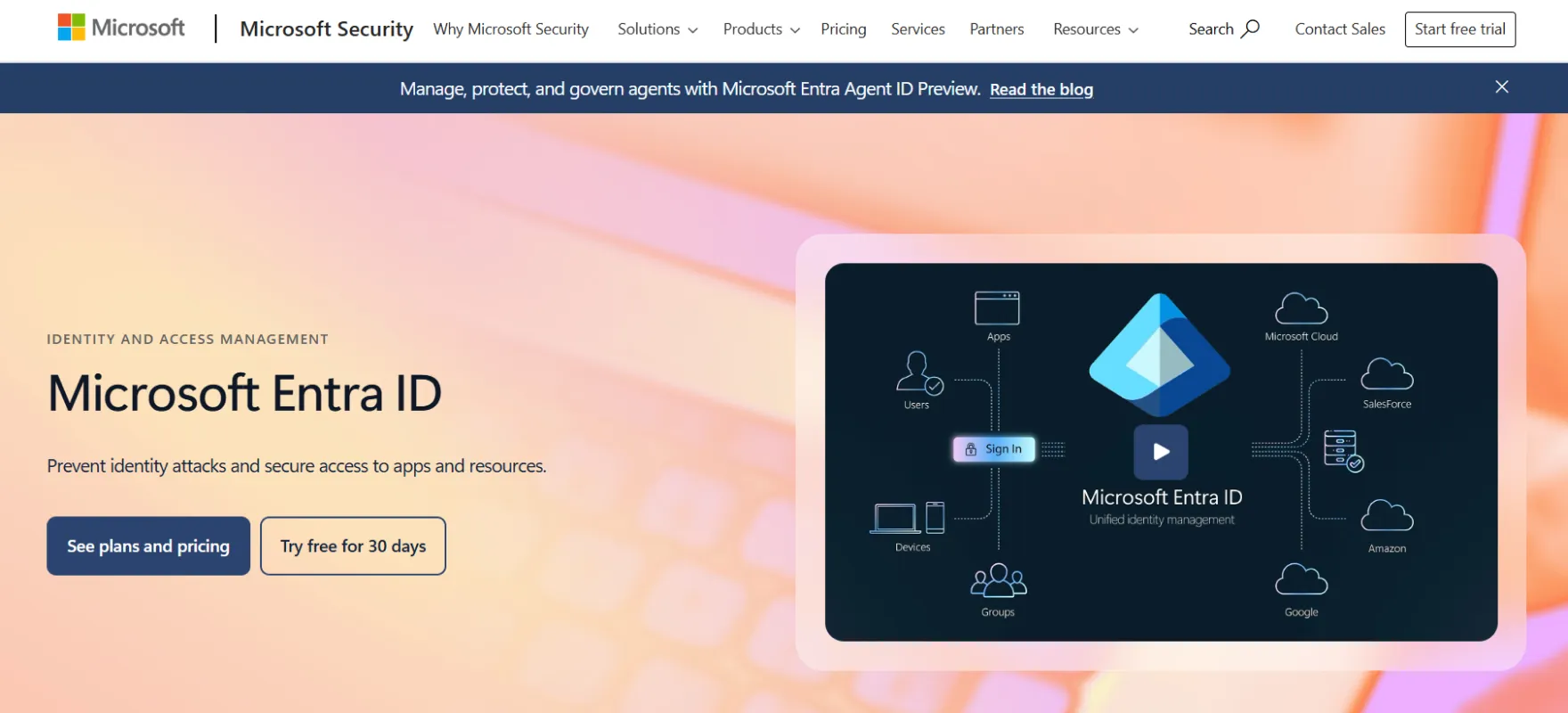
Microsoft Entra ID is made for companies that already use Microsoft services. It is often considered among SailPoint alternatives because it gives one place to control user login and access. Conditional access helps decide when extra security is needed. Users can sign in once and move across apps easily. It works well for big hybrid environments.
Key Features
- Conditional access policies. Admins create access rules using signals like risk location and device state. Access decisions change based on context instead of fixed rules.
- Integrated multifactor authentication. MFA is enforced through conditional access so users see extra verification only when needed. This balances security and usability.
- Zero trust policy engine. Microsoft Entra ID evaluates every access request continuously which helps enterprises secure identities in hybrid environments.
- Identity governance capabilities. The platform supports governance features that help organizations modernize identity control and compliance processes.
- Fine grained access conditions. Admins can combine network devices and risk signals to create detailed enterprise policies for sensitive apps.
Pros
- Microsoft Entra ID deploys quickly for companies already using Microsoft licenses.
- Conditional access and identity controls help enterprises secure login without forcing extra steps every time.
- Strong integration with the Microsoft ecosystem helps large organizations keep identity centralized.
Cons
- Multi tenant environments can become complicated and create extra management overhead.
- SSO experience may feel inconsistent in certain configurations which can frustrate users.
- Support escalation can take time according to enterprise reviews.
4. Okta Identity Governance
Okta Identity Governance focuses on controlling who gets access and why. It is often mentioned among SailPoint competitors because both platforms focus on access reviews and governance control. Access requests follow approval flows so things stay organized. It helps with audits and governance checks.
Key Features
- Access requests automation. Users request access directly inside Okta while approvals and workflows automate the process. This reduces manual IT effort.
- Access certifications. Security teams launch review campaigns to check who still needs access and remove unnecessary permissions. This supports compliance audits.
- Lifecycle management. Onboarding and offboarding processes can be automated to reduce risk from outdated access rights.
- Entitlement governance. Admins control fine grained permissions through entitlement based governance models.
- Audit ready governance reporting. Governance focused reports and audit trails help enterprises maintain visibility over identity decisions.
Pros
- Okta helps reduce manual access work and improves user experience during access requests.
- Access reviews and governance controls are easy to start with which helps organizations moving from manual processes. ROI can look positive for organizations focused on cost reduction and fast deployment.
Cons
- Some enterprises say governance depth is lighter compared to full IGA platforms. Complex certification scenarios may require custom work.
- API documentation and customization can feel limited which slows advanced automation work.
- User interface and workflow flow sometimes feel clunky according to reviews.
5. Ping Identity
Ping Identity focuses on secure login for large companies. It supports SSO, MFA and risk based authentication. Many enterprises consider it among SailPoint alternatives because it offers flexible authentication and identity access control for large environments.
Key Features
- Enterprise single sign on. Users access multiple applications with one login which improves usability and reduces password risk across enterprise systems.
- Risk based authentication. The platform evaluates device trust and context then adds MFA or blocks access when risk increases. This supports adaptive security models.
- Strong multi factor authentication. Ping supports stronger authentication methods including biometrics to improve login security without heavy user friction.
- Federated identity support. Organizations can enable secure access across multiple domains and partners using federation models.
- Flexible enterprise identity platform. Ping focuses on high flexibility and resilience so large organizations can design identity flows that match complex environments.
Pros
- Ping Identity is strong in enterprise authentication and federation which helps connect many systems securely.
- Adaptive authentication allows security to increase only when risk rises which keeps login smooth for normal users.
- The platform is flexible and fits organizations that need custom identity flows.
Cons
- Setup and architecture planning can take time especially in large deployments.
- Some features require deeper configuration which increases learning effort for new admins.
- Governance capabilities are not always as deep as dedicated IGA platforms so extra tools may be needed for full lifecycle governance.
6. Saviynt
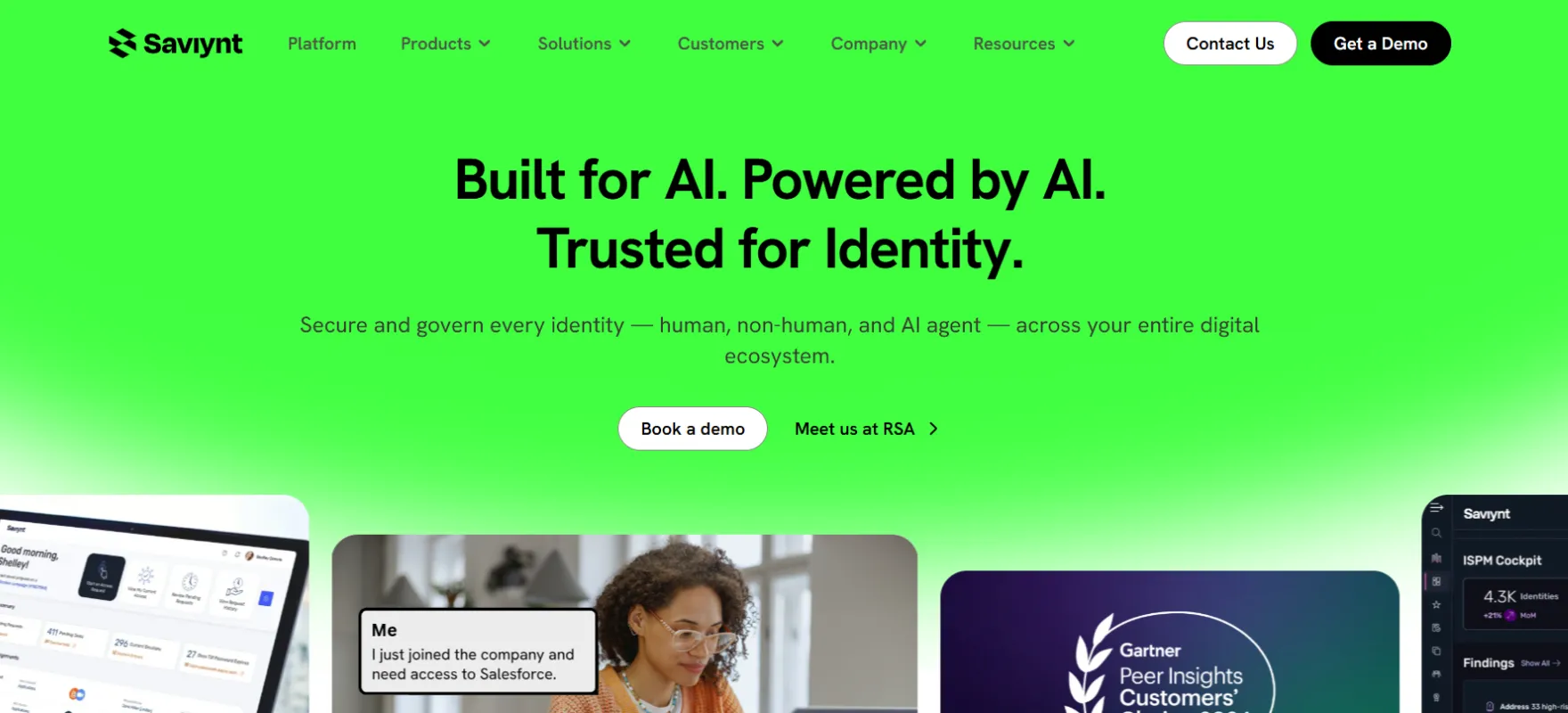
Saviynt is built around identity governance and compliance. It helps companies control access and track permissions clearly. Access reviews and lifecycle automation reduce manual effort. Because of its strong governance features it is often mentioned among SailPoint competitors especially in compliance focused environments.
Key Features
- Cloud first identity governance. Saviynt focuses on cloud based identity governance that helps enterprises secure human and non human identities across modern environments. The platform is designed to simplify access while keeping compliance strong.
- Identity lifecycle and provisioning. The system supports identity lifecycle processes like provisioning and access updates so users get the right access at the right time. This reduces outdated permissions and lowers risk.
- Access reviews and certification. Access review workflows help organizations verify who has access and why. This supports governance and audit readiness without manual tracking.
- Built in compliance controls. Saviynt includes control frameworks that help track access usage and support compliance reporting. This helps large enterprises reduce governance workload.
- AI driven identity security. The platform positions itself around intelligent identity governance with automation and cloud scale security.
Pros
- Saviynt provides deep identity governance with lifecycle control access reviews and policy management.
- API first design and many integrations help connect enterprise systems faster.
- Strong focus on segregation of duties and compliance helps organizations reduce audit risk.
Cons
- Implementation can feel heavy because governance depth comes with complexity.
- The learning curve is higher for admins compared to lighter IAM tools.
- Large scale deployments may require longer planning cycles before full value appears.
7. Omada Identity
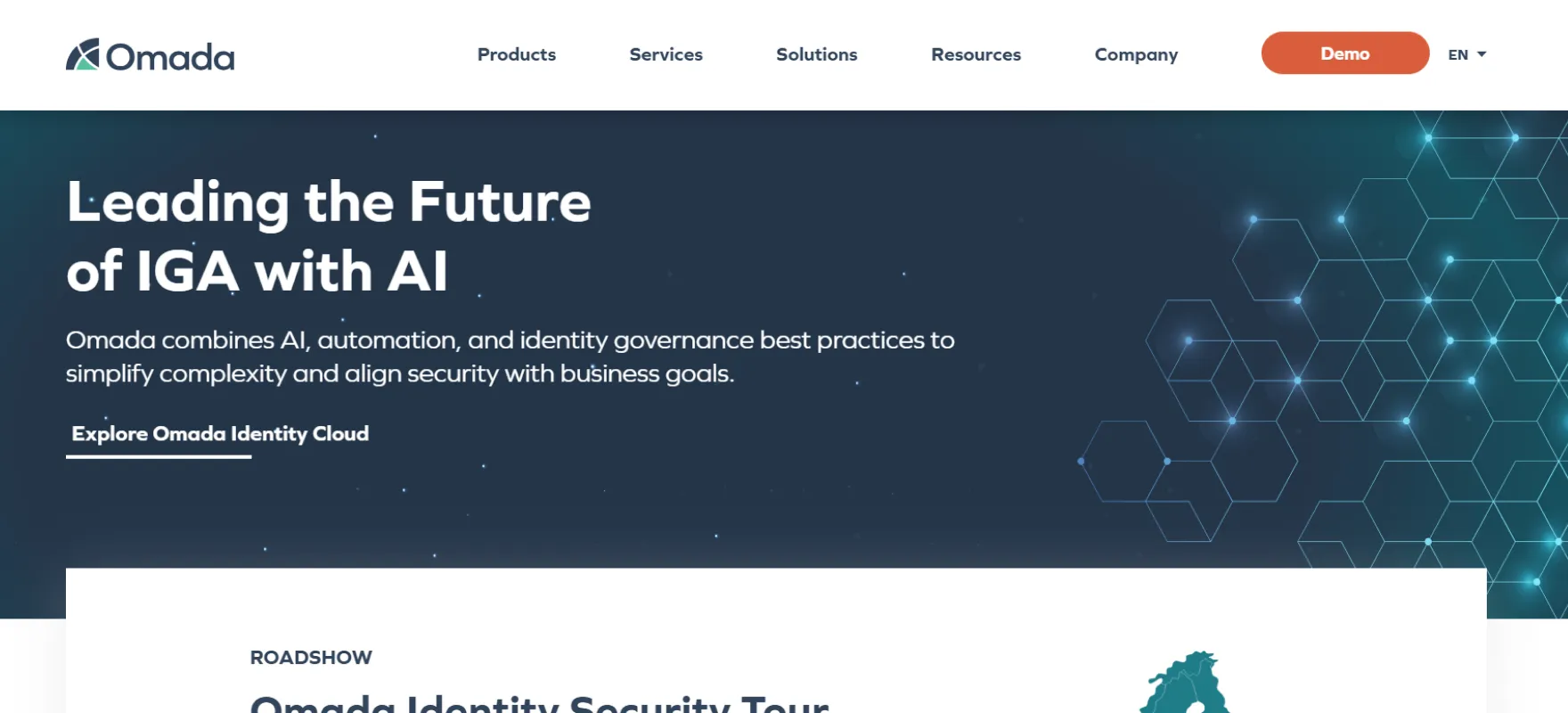
Omada Identity is designed for governance heavy organizations. It automates access processes so permissions stay aligned with roles. Many organizations evaluating SailPoint alternatives also consider Omada because of its strong governance model. Managers can review access without too much confusion.
Key Features
- Centralized identity governance. Omada gives one platform to manage identities, access rights and policies across systems. This helps organizations understand who has access and why.
- Automated identity lifecycle management. Onboarding role assignment and deprovisioning can be automated so access stays aligned with business roles.
- Contextual access governance. Role management and segregation of duties controls help keep access clean and reduce compliance risk.
- Configurable workflows. Organizations can adjust governance processes to match internal policies instead of forcing fixed workflows.
- Scalable SaaS IGA platform. Omada Identity Cloud is built as a scalable SaaS solution for enterprises managing complex identity environments.
Pros
- Omada is strong for structured governance and policy driven access management. It works well for enterprises with strict compliance needs.
- Automation helps reduce manual identity lifecycle work and keeps access aligned with roles.
- The platform is designed around identity governance which fits organizations moving away from manual audits.
Cons
- Reviews mention a steep learning curve especially during early setup. Teams may struggle at first.
- Performance issues can appear when data grows large especially in complex environments.
- Architecture can feel complex which makes troubleshooting harder for new teams.
8. One Identity Manager
One Identity Manager helps control user access across many systems. It focuses on giving people only the access they really need. Because of its governance capabilities it is often considered a SailPoint competitor in enterprise identity management. Governance rules stay centralized which makes management easier.
Key Features
- Unified governance and policy control. One Identity Manager helps organizations unify security policies and governance rules across hybrid environments.
- Role based access governance. The platform ensures users get only the access they need which helps reduce risk and support compliance.
- AI driven governance support. Identity governance workflows use intelligent automation to improve security decisions and reduce manual effort.
- Broad target system integration. The platform supports many target systems so enterprises can manage identities across complex IT ecosystems.
- Hybrid identity management. One Identity Manager supports on premises cloud and hybrid environments which makes it flexible for large enterprises.
Pros
- One Identity Manager gives strong governance and policy control across hybrid environments. This helps enterprises centralize identity decisions.
- Role based access management keeps permissions cleaner and reduces risk.
- It supports many integrations which makes it useful for large organizations with mixed systems.
Cons
- Setup and customization can be complex especially for enterprises with legacy infrastructure.
- Admin training is often required because governance features are deep.
- User interface and workflows may feel heavy for teams wanting quick deployment.
9. IBM Security Verify Governance
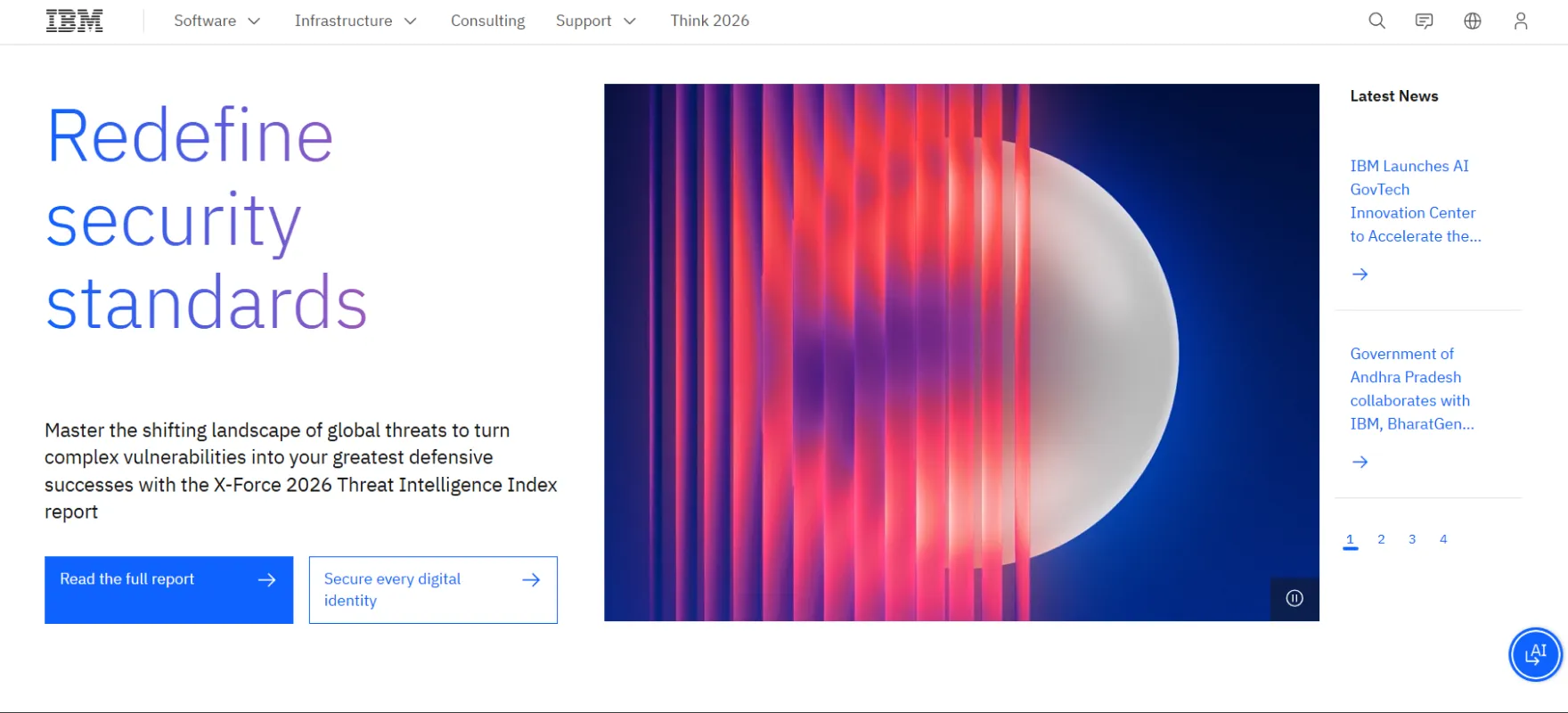
IBM Security Verify combines identity governance with risk visibility. Many enterprises exploring SailPoint alternatives also evaluate IBM Security Verify because it connects provisioning policy control and risk analytics in one platform. Large organizations use it for strong governance structure.
Key Features
- Unified identity governance and administration. IBM Verify Identity Governance combines provisioning governance and risk insights into one platform. This helps enterprises manage identity risk with better visibility.
- Identity analytics and risk insights. Visual analytics help security teams identify risky users and detect unusual behavior faster.
- Lifecycle and provisioning control. Access provisioning and governance workflows help keep permissions aligned with organizational policies.
- Access certification and policy enforcement. Teams can run access reviews and enforce governance rules to maintain compliance.
- Hybrid enterprise IAM support. IBM Verify integrates with existing enterprise tools and works well in hybrid environments where systems are mixed.
Pros
- IBM Security Verify combines governance and analytics which helps teams see risky access patterns faster. This improves enterprise visibility.
- Lifecycle and provisioning controls support structured governance in large organizations.
- It fits enterprises that want identity security tied closely with analytics and risk insight.
Cons
- Platform complexity can increase deployment time especially in large environments.
- Some organizations may find configuration heavy compared to lighter IAM tools.
- Full value often appears only after proper tuning which takes time and planning.
10. Oracle Identity Governance
Oracle Identity Governance automates access provisioning and lifecycle changes. It helps organizations keep access updated when roles change. Governance workflows support policy control and compliance needs. Many enterprises evaluating SailPoint alternatives also consider Oracle Identity Governance for structured enterprise identity management.
Key Features
- Automated provisioning and deprovisioning. Oracle Identity Governance manages user access automatically so organizations can reduce manual provisioning work.
- Complete identity lifecycle management. The platform supports lifecycle processes and entitlement controls across cloud and on premises systems.
- Identity intelligence and risk remediation. Governance analytics help teams identify high risk entitlements and fix them faster.
- Workflow and policy management. Built in workflows help organizations automate approval flows and policy enforcement.
- Self service identity interface. End users and admins can manage identity related actions through dedicated web interfaces which improves usability.
Pros
- Oracle Identity Governance automates provisioning and lifecycle management which helps keep access updated. This reduces manual errors.
- Strong policy workflows support compliance focused environments.
- Enterprises using Oracle systems benefit from tighter integration and easier alignment.
Cons
- Setup can feel complex especially for teams without Oracle experience.
- Interface and workflows may feel heavy compared to newer cloud native tools.
- Large deployments often need careful planning and skilled administrators.
11. CyberArk
CyberArk focuses on protecting powerful accounts and sensitive access. It is often discussed among SailPoint alternatives when organizations need stronger privileged access security. It controls privileged identities and reduces security risk. The platform also covers machine and non human identities.
Key Features
- Identity security platform approach. CyberArk secures human and machine identities using governance access control and threat protection in one platform.
- Privilege and least privilege controls. The platform focuses strongly on privileged access and just in time access to reduce credential misuse risk.
- Comprehensive identity coverage. CyberArk extends protection beyond IT admins to developers cloud teams and non-human identities.
- Continuous identity threat protection. Identity security includes detection and protection capabilities that align with zero trust strategies.
- Centralized audit and administration. Organizations get centralized administration and reporting which helps governance and compliance tracking.
Pros
- CyberArk is strong in privileged access security which protects high risk accounts. This is important for enterprise identity security strategies.
- It supports both human and machine identities which helps modern cloud environments.
- Centralized control and monitoring improve visibility over sensitive access.
Cons
- Focus on privileged access means some organizations may still need a separate IGA platform for full governance.
- Implementation can feel complex because security controls are very detailed.
- Teams may need training to use advanced privilege features correctly.
How to Choose the Right SailPoint Competitor?
Identity security breaks when small gaps stay invisible for a long time. So the right choice comes from understanding where your real risk lives, not from comparing feature lists.
- Look at access change speed, not only automation. Many platforms say they automate lifecycle changes but the real question is how fast access updates after a role change. In many breaches attackers use old permissions that nobody noticed.
- Check governance clarity for managers, not just admins. Access reviews often fail because managers do not understand what they are approving. If reviews become click and approve exercises then governance is only cosmetic.
- Measure identity noise level. Some platforms create too many alerts, too many workflows and too many approvals. This causes security fatigue and teams start ignoring signals.
- Understand how the platform handles invisible identities. Service accounts, APIs, and automation workloads usually hold strong permissions but get less attention. Many tools support them on paper but governance is weak in practice.
- Watch how fast the system becomes trustworthy. Enterprise teams usually trust identity data only after months of cleanup. A strong alternative helps clean roles, permissions and policies early so teams gain confidence quickly.
Finding the Right SailPoint Competitor
Research keeps showing that identity risk starts with access that should not exist anymore. Verizon’s DBIR shows stolen credentials remain one of the top initial actions in breaches which means attackers often enter using valid access instead of breaking security walls.
- The real question is not which platform has more governance screens. The real question is which platform quietly keeps access aligned with reality without constant manual effort.
- Another deep issue is approval quality. In many systems managers approve access without real context because permissions look technical or unclear.
- Authentication is another hidden pressure point. Security guidance keeps moving toward phishing resistant authentication because passwords and traditional MFA are still bypassed too easily.
- But if stronger authentication creates user friction people look for shortcuts. The better direction is where security becomes stronger while login feels lighter not heavier.
- Cost also matters more than teams admit. IBM reports the average global breach cost has reached about 4.88 million dollars.
The final shift happening now is identity scale. Service accounts, APIs, and automation workloads usually hold strong permissions but get less attention. Platforms that treat machine identities as secondary often create blind spots.
The strongest direction is where human and non-human identities follow the same governance logic so risk does not hide between systems.
A More Practical Direction
- The identity lifecycle should move automatically with business changes so access never falls behind reality.
- Governance should reduce decision fatigue by showing clear context instead of technical noise.
- Authentication should follow modern phishing resistant methods while keeping login smooth for users.
- Human and machine identities should stay under the same policy model so visibility remains complete.
- The platform should reduce daily cleanup work so security teams spend time on risk not maintenance.
See how modern identity governance feels in real workflows. Book a live demo to understand automation access control and clean security decisions in action. Click the demo page and experience it yourself.
FAQs
Which is better, SailPoint or CyberArk?
SailPoint focuses more on traditional enterprise governance with deep certification workflows, while CyberArk focuses mainly on privileged access security and high risk accounts through PAM and least privilege controls.
Infisign is often preferred when teams want modern governance with simpler automation and faster setup, making it one of the practical SailPoint pricing alternatives for organizations that want strong identity control without heavy enterprise overhead
What is the best SailPoint alternative for cloud-first organizations?
Infisign is a strong choice for cloud-first organizations because it offers cloud native governance, fast automation, passwordless access, and simple lifecycle control that works well in modern and fast moving environments.
What features should I look for in a SailPoint alternative?
Look for features like Infisign offers, lifecycle automation, access governance, modern authentication, compliance readiness, and machine identity support. These features help reduce manual work and keep identity security simple and clean.


